

The second quarter of 2026 demonstrated an important lesson for investors: markets can continue to advance even when uncertainty dominates the headlines. Persistent inflation concerns, heightened geopolitical tensions, high energy prices, and evolving expectations for Federal Reserve policy all contributed to periods of market volatility. Despite these headwinds, U.S. equities recovered from a difficult first quarter and continued their longer-term upward trend, leaving the major market indices higher after the first half of the year.
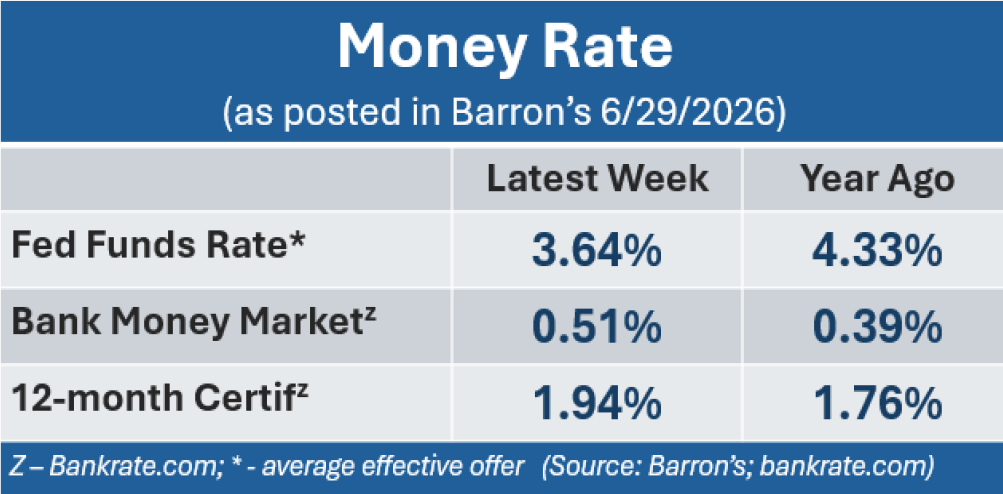
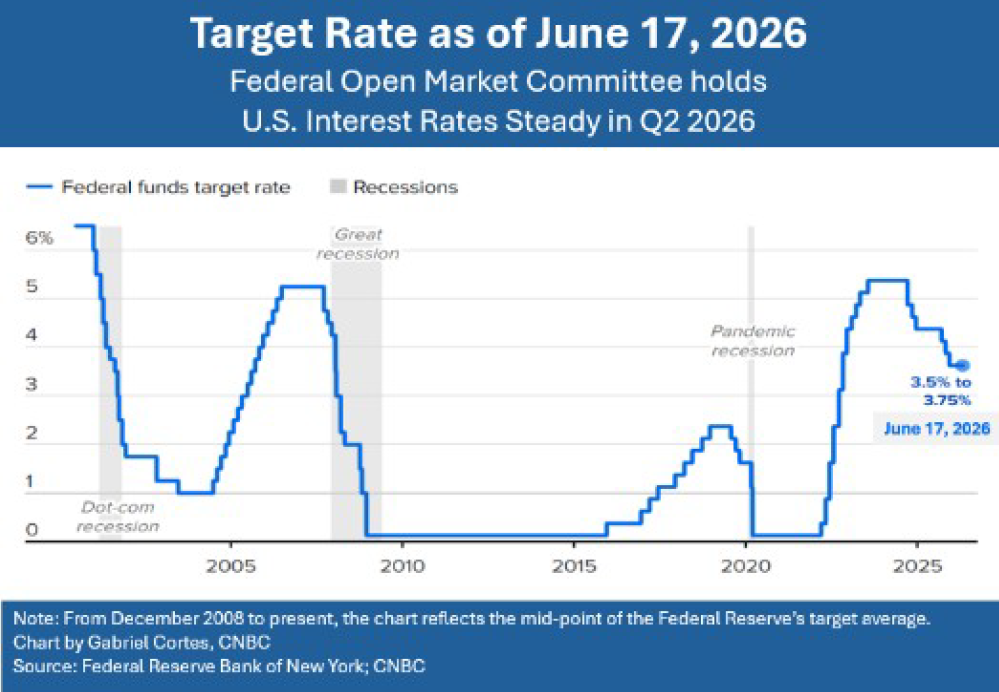
Equity markets also navigated an important leadership transition at the Federal Reserve. Following the departure of Chair Jerome Powell, Kevin Warsh presided over his first Federal Open Market Committee (FOMC) meeting. As widely expected, policymakers left the federal funds target range unchanged at 3.50% to 3.75%. While interest rates remained steady, the Committee adopted a more hawkish tone, signaling that inflation still remains a primary concern and reducing expectations for possible interest rate cuts later this year.
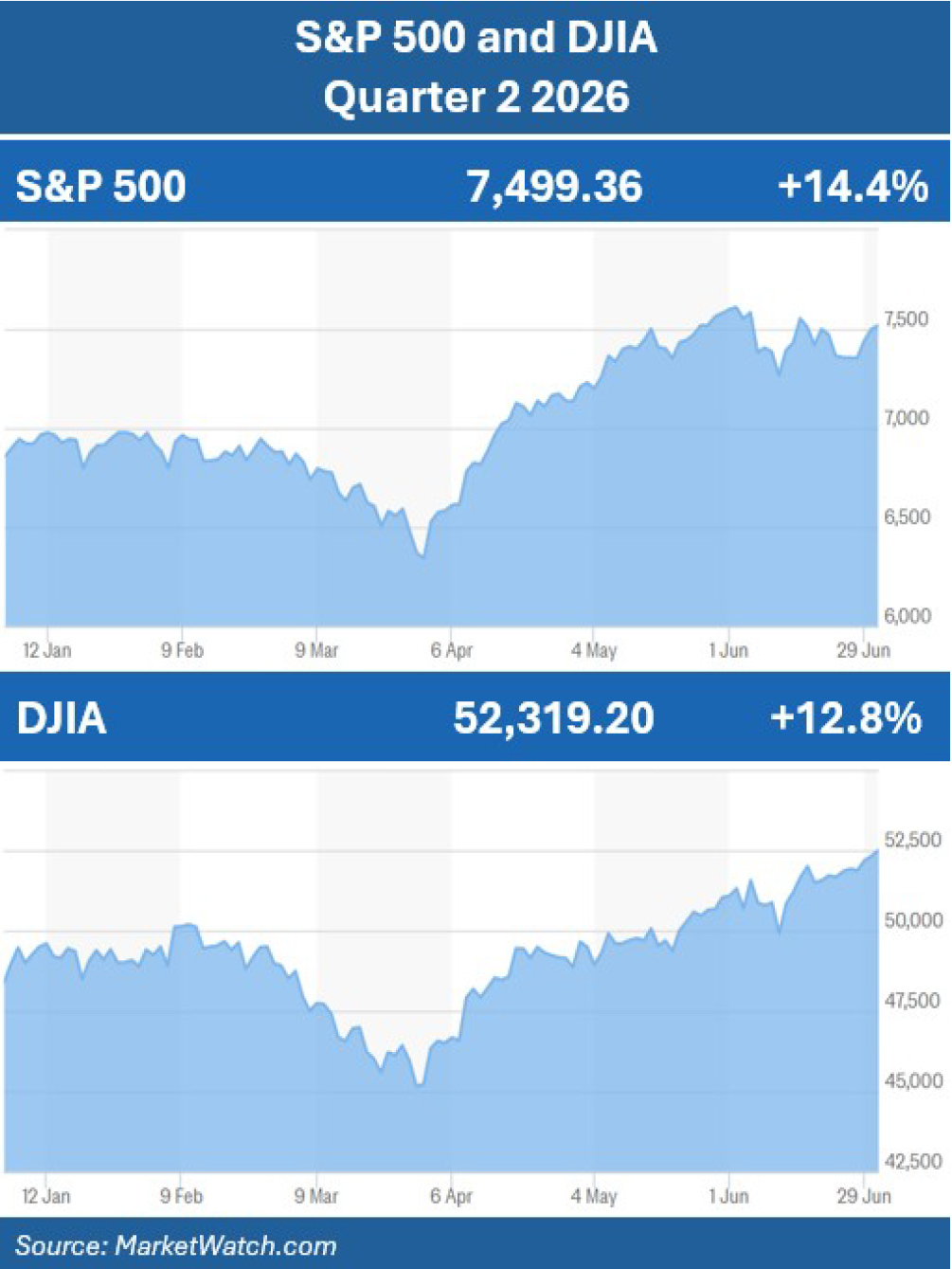
After a down first quarter, both the S&P 500 and DJIA indexes made impressive rebounds. The S&P 500 closed the quarter at 7,499.36, up 14.4%. The Dow Jones Industrial Average closed the quarter at 52,319.20, gaining approximately 12.8% for the quarter. (Source: statmuse.com)
Following a volatile first quarter, investor confidence strengthened during the second quarter. Strong corporate earnings, a resilient U.S. economy, and continued enthusiasm for artificial intelligence (AI) and technological innovation helped drive a broad-based equity market recovery.
Through the first six months of 2026, the S&P 500 has gained 9.6%, and the Dow has advanced 8.9%. (Source: apnews.com; 6/30/26)
The energy sector was among the largest contributors to market volatility. West Texas Intermediate (WTI) crude oil surged to over $110 per barrel amid escalating geopolitical tensions and concerns over potential supply disruptions. As tensions eased later in the quarter, crude oil prices retreated to approximately $70 per barrel, helping relieve some inflationary pressure and improving investor sentiment. (Source: ycharts.com)
The U.S. labor market continues to demonstrate resilience. According to the U.S. Bureau of Labor Statistics, the unemployment rate remained steady at 4.3% in May, reflecting continued labor market stability despite signs of moderating economic growth.
Overall, the second quarter reinforced an important investment principle: while headlines often create short-term market volatility, long-term market performance is ultimately driven by healthy, long-term focused fundamentals. During the quarter, potential catalysts for market downturns were balanced by factors that continued to support economic growth and a healthy investment environment. These competing forces underscored that volatility remains a normal part of investing, while reinforcing the importance of focusing on long-term fundamentals rather than reacting to short-term market noise.
As market conditions continue to evolve, maintaining a disciplined, well-structured investment approach remains essential. As financial professionals, our role is to closely monitor market developments and help ensure your portfolio remains aligned with your broader financial goals. We remain committed to keeping you informed, prepared, and well-positioned to navigate changing market conditions with confidence.
Inflation & Interest Rates
Key Points
The Federal Reserve left the federal funds rate unchanged during the second quarter of 2026, maintaining the target range at 3.50%–3.75%.
Inflation remains above the Fed’s long-term target and continues to be a primary concern.
The Federal Open Market Committee (FOMC) has adopted a more hawkish stance, reducing expectations for rate cuts and signaling the possibility of future rate increases.
During the first half of 2026, the Federal Open Market Committee (FOMC) kept its benchmark federal funds rate unchanged, maintaining the target range at 3.50%–3.75%, leaving borrowing costs the same for four consecutive meetings.
At the April FOMC meeting, the final meeting chaired by Jerome Powell, the Federal Reserve held interest rates steady. This decision was widely anticipated amid persistent inflationary pressures fueled in part by elevated global energy prices.
In its June policy statement, the FOMC noted:
“Economic activity is expanding at a solid pace despite elevated uncertainty that owes, in part, to the conflict in the Middle East. Productivity growth and capital investment are strong. Job gains have kept pace with the workforce, and the unemployment rate has changed little.”
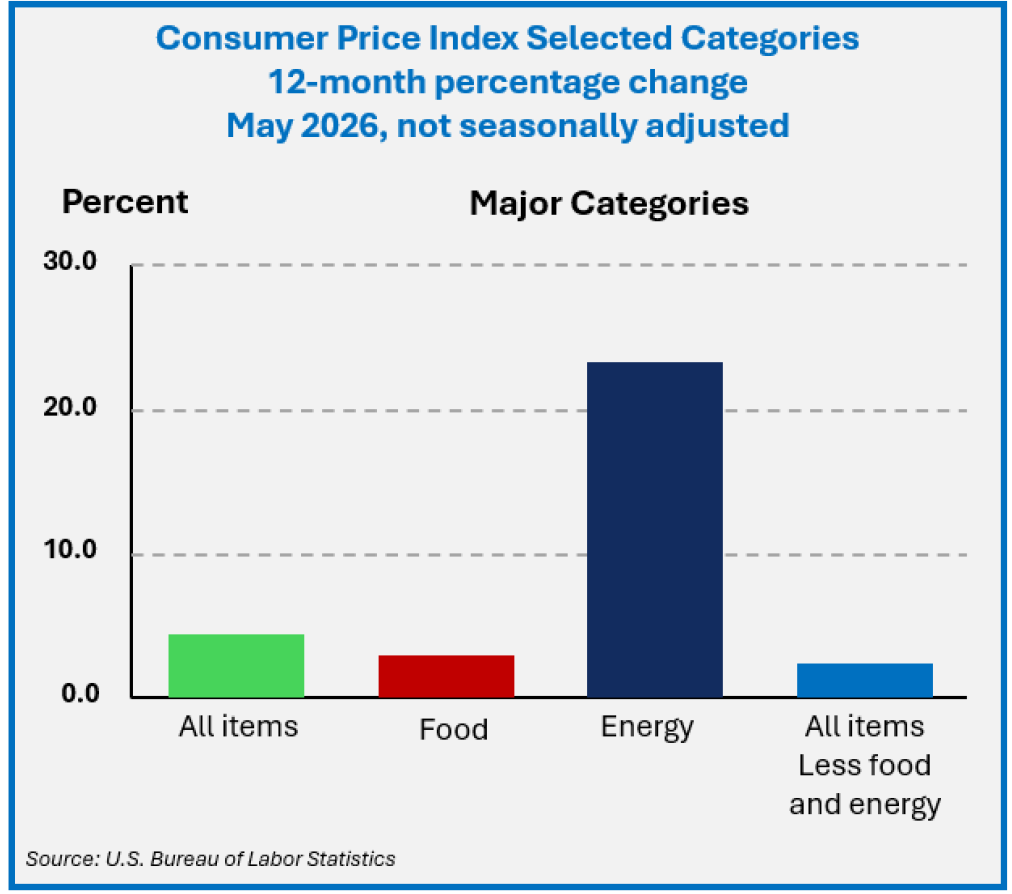
Consumer spending also remains healthy. According to May data from the Bureau of Labor Statistics, the core Consumer Price Index (CPI), which excludes food and energy, increased 2.9% year-over-year. Food prices rose 3.1%, while shelter costs, the largest component of the CPI, increased 3.4% from a year earlier.
Source: Bureau of Labor Statistics
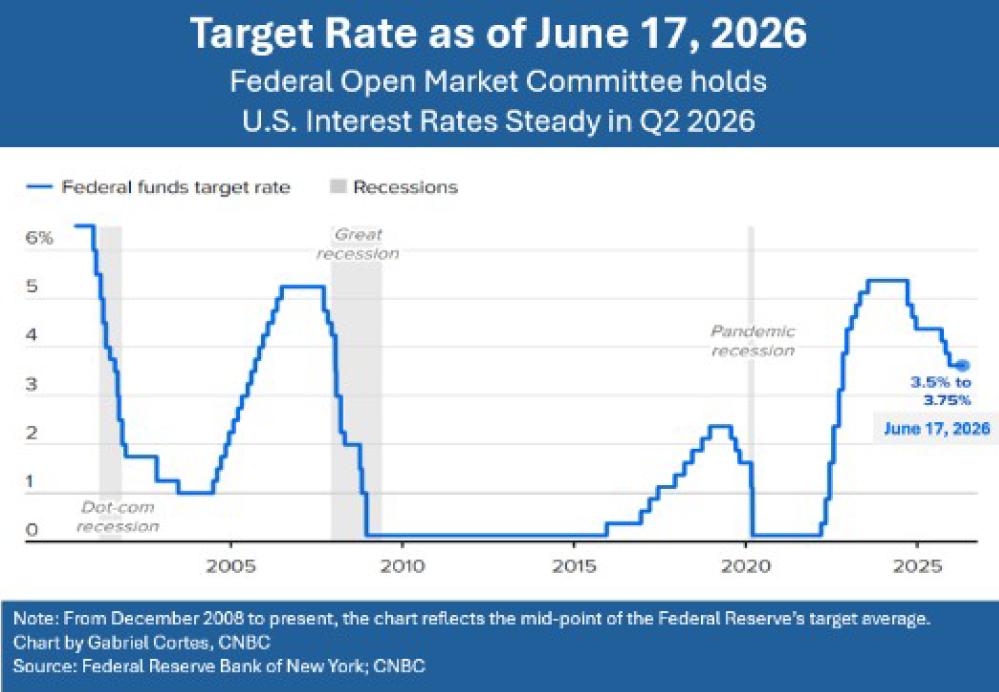
The June meeting marked the first FOMC gathering under newly appointed Federal Reserve Chair Kevin Warsh. Policymakers again voted to maintain the target rate range of 3.50%–3.75%, while signaling a more hawkish outlook for the remainder of the year. According to updated projections, nine of the eighteen committee members now expect at least one rate increase before year-end, and previous indications of potential rate cuts have largely been removed.
Source: CNBC, June 17, 2026
The June meeting also brought updated inflation forecasts. In March, FOMC members projected that the Personal Consumption Expenditures (PCE) Price Index would end 2026 at an annual rate of 2.7%. By June, that estimate had been revised upward to 3.6%, while core PCE, which excludes food and energy prices, was projected to finish the year at 3.3%.
Source: CNBC, June 17, 2026
Looking ahead, the prospect of a rate cut in 2026 appears increasingly unlikely. In fact, the possibility of a rate increase later this year has gained momentum. The path forward will largely depend on the trajectory of inflation, labor market conditions, and overall economic growth.
Geopolitical developments may also influence inflation trends. As of late June, negotiations toward a potential framework for peace between Iran and the Trump administration were reportedly underway. Should an agreement be reached, lower crude oil prices could help ease energy-related inflationary pressures.
Interest rates and inflation remain critical factors in financial planning and investment decision-making. We will continue to monitor these economic indicators closely and provide updates as conditions evolve.
The Bond Market and Treasury Yields
Key Points
- Treasury yields remained elevated as investors continued to consider the prospect of higher-for-longer interest rates.
- The Treasury yield curve continued its gradual normalization following an extended period of inversion.
During the second quarter of 2026, U.S. Treasury yields remained elevated as investors assessed persistent inflation, resilient economic growth, and evolving expectations for Federal Reserve monetary policy. While Treasury yields experienced short periods of volatility, particularly in response to economic data releases and shifting interest rate expectations, the bond market remained relatively resilient as investors balanced inflation concerns against continued signs of economic strength.
Throughout the quarter, the 10-year Treasury yield generally traded in the mid-4% range, while the 2-year Treasury yield remained above 4%, reflecting expectations that short-term interest rates would stay higher for longer.
At the end of the second quarter, the 10-year Treasury yield closed at **4.44%**, the 5-year Treasury yield at **4.19%**, and the 30-year Treasury yield at **4.91%**.
**Source:** U.S. Department of the Treasury Resource Center
After remaining inverted for much of the previous two years, the Treasury yield curve continued normalizing during the quarter. The spread between shorter- and longer-term Treasury yields moved into positive territory, suggesting investors anticipate continued economic expansion alongside a more balanced long-term interest rate environment.
Although expectations for the timing and pace of future interest rate adjustments continued to shift, Treasuries and bonds remain an important component of diversified investment portfolios. They may offer a relatively more stable alternative to equities, particularly during periods of heightened market uncertainty. At the same time, the possibility of rising interest rates could create price volatility for existing bonds. Please remember that while diversification in your portfolio can help you pursue your goals, it does not ensure a profit, or guarantee against loss.
As always, bond investments should be evaluated within the context of an investor’s risk tolerance, time horizon, and overall financial objectives. Bonds remain a core component of many well-balanced portfolios, and we will continue to monitor developments in Federal Reserve policy and Treasury markets as conditions evolve.
Throughout the quarter, the 10-year Treasury yield generally traded in the mid-4% range, while the 2-year Treasury yield remained above 4%, reflecting expectations that short-term interest rates would stay higher for longer.
At the end of the second quarter, the 10-year Treasury yield closed at 4.44%, the 5-year Treasury yield at 4.19%, and the 30-year Treasury yield at 4.91%. (Source: U.S. Department of the Treasury Resource Center)
After remaining inverted for much of the previous two years, the Treasury yield curve continued normalizing during the quarter. The spread between shorter- and longer-term Treasury yields moved into positive territory, suggesting investors anticipate continued economic expansion alongside a more balanced long-term interest rate environment.
Although expectations for the timing and pace of future interest rate adjustments continued to shift, Treasuries and bonds remain an important component of diversified investment portfolios. They may offer a relatively more stable alternative to equities, particularly during periods of heightened market uncertainty. At the same time, the possibility of rising interest rates could create price volatility for existing bonds. Please remember that while diversification in your portfolio can help you pursue your goals, it does not ensure a profit, or guarantee against loss.
As always, bond investments should be evaluated within the context of an investor’s risk tolerance, time horizon, and overall financial objectives. Bonds remain a core component of many well-balanced portfolios, and we will continue to monitor developments in Federal Reserve policy and Treasury markets as conditions evolve.
Investors’ Outlook
Key Points:
We remain cautiously optimistic. While volatility is likely to remain, continued earnings growth, a resilient economy, and the possibility of a resolution in Iran, provides an encouraging backdrop for investors as we move through the remainder of 2026.
Maintaining a long-term focus and avoiding short-term distractions has been one of the most effective ways to pursue financial goals.
As we enter the second half of 2026, the investment landscape remains, for the most part, positive, although investors should continue to expect periods of elevated volatility. The same factors that influenced markets during the first half of the year are likely to remain the primary drivers of market performance:
the direction of inflation,
Federal Reserve policy,
corporate earnings,
geopolitical developments, particularly regarding the Strait of Hormuz,
confidence in advancements in technology and artificial intelligence.
Looking ahead, we remain cautiously optimistic. Although volatility is expected, the combination of healthy corporate earnings and a resilient economy provides a supportive backdrop for investors as we move through the remainder of 2026.
Most analysts are suggesting higher movements in equity markets when deliberating the outlook for the remainder of 2026. Ed Yardeni, the President of market advisory firm Yardeni Research and former Chief Investment Strategist at Deutsche Bank’s U.S. equities division, expects the stock market to continue its rise over the second half of this year and is forecasting a further 9% gain in the S&P 500. To the contrary, a handful of others, including Tyler Richey, an analyst at Sevens Report Research, are predicting a decline in major indexes through the end of 2026. (Source: abcnews.com; 6/30/26)
The pace of equity market growth has accelerated over the last decade, however, we are not in the business of predicting the future. Regardless of what may transpire, history has consistently demonstrated that maintaining a disciplined,
Diversified investment strategy remains one of the most effective ways to navigate uncertain markets. Rather than attempting to predict short-term movements, or falling prey to the day-to-day noise from the media, investors are generally better served by remaining focused on their long-term financial objectives and allowing high-quality investments time to compound.
We will continue to closely monitor market developments and make thoughtful portfolio adjustments when appropriate, always with your long-term goals at the forefront of our investment decisions.
Short-term volatility is likely to remain. Please remember that volatility is a normal and expected part of the investment experience. While market fluctuations can feel uncomfortable, they are not always negative and may create opportunities for disciplined investors. Periods of market weakness can bring the ability to invest at more attractive prices, rebalance portfolios, or harvest losses to help offset capital gains. As always, portfolios should be thoughtfully selected and aligned with each investor’s unique objectives, time horizon, and risk tolerance.
We want to help others like you!
We believe an informed client is the best client. Our commitment is to exceed your expectation by delivering exceptional service, maintaining consistent, meaningful communication throughout the year, and proactively planning to help you navigate the changing economic environment. We will keep you informed about developments that could impact your personal situation and, as always, please inform us of any changes to your circumstances or adjustments to your risk tolerance or time horizon.
Our team is here to help you with every step of your journey toward your financial goals. Please feel free to reach out to us with any questions or concerns you may have. We greatly value the trust and confidence you place in our firm and look forward to continuing to serve you.
**Note: The views stated in this letter are not necessarily the opinion of broker/dealer, and should not be construed, directly or indirectly, as an offer to buy or sell any securities mentioned herein. Investors should be aware that there are risks inherent in all investments, such as fluctuations in investment principal. With any investment vehicle, past performance is not a guarantee of future results. Material discussed herewith is meant for general illustration and/or informational purposes only; please note that individual situations can vary. This information should be relied upon when coordinated with individual professional advice. This material contains forward-looking statements and projections. There are no guarantees that these results will be achieved. All indices referenced are unmanaged and cannot be invested in directly. Unmanaged index returns do not reflect fees, expenses, or sales charges. Index performance is not indicative of the performance of any investment. There is an inverse relationship between interest rate movements and bond prices. Note that individual situations can vary. This material contains forward-looking statements and projections. There are no guarantees that these results will be achieved. There is no guarantee that a diversified portfolio will enhance overall returns or outperform a non-diversified portfolio. Diversification does not protect
Security Financial Management
A Bluespring Wealth Partner
2420 South Lakemont Avenue, Suite 120, Orlando, FL 32814
Phone: (407) 740-6553
Email: sfm@sfmadvisorgroup.com
Website: sfmadvisorgroup.com
The information in this material is not intended as tax or legal advice. Please consult legal or tax professionals for specific information regarding your individual situation. Securities offered through Kestra Investment Services, LLC, member FINRA/SIPC (Kestra IS). Investment advisory services offered through Kestra Advisory Services, LLC (Kestra AS). Security Financial Management, Bluespring Wealth Partners, LLC, Kestra IS, and Kestra AS are affiliated through common ownership by Kestra Holdings.